
Thursday, April 23, 2026
Beyond the Crime Scene
  • Home
  • News
  • True Crime Stories
  • Videos
  • Podcast
No Result
View All Result
  • Home
  • News
  • True Crime Stories
  • Videos
  • Podcast
No Result
View All Result
Beyond the Crime Scene
No Result
View All Result
Home News

How Some U.S. Cities Want to Avoid Paying for Police Misconduct

by
November 1, 2025
in News
0
How Some U.S. Cities Want to Avoid Paying for Police Misconduct
191
SHARES
1.5k
VIEWS
Share on FacebookShare on Twitter


This is The Marshall Project’s Closing Argument newsletter, a weekly deep dive into a key criminal justice issue. Want this delivered to your inbox? Sign up for future newsletters.

On Oct. 29, 1984, a White New York City police officer shot and killed Eleanor Bumpurs, a 66-year-old Black woman, during an eviction at her Bronx home. The shooting ignited a major, long-running debate over police use of force against people experiencing mental health crises. The officer who shot her was indicted for second-degree manslaughter, but ultimately acquitted at trial.

On Wednesday — 41 years to the day after Bumpurs’ death — former Illinois sheriff’s deputy Sean Grayson was convicted of second-degree murder in the July 2024 shooting death of Sonya Massey. The two cases were often mentioned together, as both involved Black women with mental health challenges who were killed in their homes by White officers.

It’s hard to see the parallels between the cases and not wonder what, if anything, it says about changes in police accountability over time, particularly in light of the different legal outcomes for the officers. But as we’ve covered in this newsletter before, it’s generally unwise to make grand presumptions about trends based on a few cases. National data shows prosecutions of police are still rare and have not risen significantly in recent years.

Grayson wasn’t the only officer in the U.S. to face criminal penalties for a shooting death in October. In Los Angeles, former LAPD officer Clifford Proctor, who is Black, was indicted last week on second-degree murder charges in the 2015 shooting death of Brendon Glenn, a Black homeless man.

As in Massey’s case, Proctor’s criminal charges were a welcome measure of accountability for the family of the deceased, but not the first place they received legal recognition of the loss they suffered. Glenn’s family agreed to a $4 million civil settlement in 2016, and Massey’s family agreed to a $10 million settlement in February. Even in 1990, Bumpurs’ estate received $200,000.

Past Marshall Project reporting has found that, in the aggregate, the cost of police misconduct settlements reach into the billions, even looking at just a handful of the largest cities over a single decade. But recently, two cities have embraced a legal maneuver that, if widely adopted, could limit how much victims actually recover from these settlements.

In Denver earlier this month, a jury awarded nearly $20 million to six bystanders who were wounded when police opened fire into a crowded nightlife district in 2022. Shortly after the verdict, the news outlet Denverite reported that “the victims may never see a penny of it from the city of Denver.”

Cities typically indemnify their officers, a legal term meaning the city pays for damages from an officer’s conduct while on duty. But in this case, Denver argued that the shooting was an act of negligence, rather than a direct constitutional violation. A judge agreed, and that ruling effectively removed the case from the domain of the state’s 2020 police reform law, which requires cities in Colorado to fulfill judgements over civil rights violations, and for officers to pay a contribution in certain cases as well.

Instead, only the officer is liable for the judgement — at least for now — as there could be further litigation.

Making the officer alone liable may sound like a step toward police accountability, but in practice, most officers are what lawyers call “judgment-proof.” Most police earn modest salaries, and their homes, retirement savings and personal property are generally protected under debtor laws. These protections vary from state to state — and apply to most people, not just police officers — but they make it nearly impossible for victims or their families to recover large civil settlements directly from an officer.

Policing expert Seth Stoughton told Denverite he doesn’t think that cities moving away from indemnification in cases of misconduct is a one-off. Based on conversations with lawyers who represent cities in these kinds of cases, he said he sees signs of a broader — if anecdotal — trend. Stoughton told the outlet: “When an officer does something that is so far outside the bounds of expected professional competency … then cities are starting to say, why are they [the city] covering their expenses?”

Widespread adoption of this posture would mean, paradoxically, that the more egregious an officer’s behavior, the more difficult it would be for victims to ultimately collect a civil payout.

Another case study is in Minnesota. This week, a state appeals court ruled that the city of Minneapolis does not need to defend or indemnify five officers accused of using excessive force during the 2020 protests following George Floyd’s murder. Body camera footage showed the officers saying they planned to indiscriminately launch less-lethal projectiles at the first people they saw out past curfew in late May of 2020. When they arrived at a gas station and found a group gathered in the parking lot, they did exactly that. Minutes later, several of these same officers would be involved in firing plastic munitions at Jaleel Stallings, a case I covered in detail last year.

In its opinion, the court agreed that the officers’ conduct that night amounted to a “willful neglect of duty,” which under state law allows the city to decline indemnification. As in Denver, that means any civil judgement about the officers’ conduct would be owed by the officers themselves, not the city, and would create the same challenges to collect.

Attorney Eric Rice, who is representing the plaintiffs in the excessive force case in Minneapolis, said the ruling captures the odd contradiction at the heart of this approach to accountability. “It’s important that officers have some skin in the game. But, my clients also deserve to have their harms fully compensated,” Rice said. “When the city fails to timely discipline the officers, change its policies, or indemnify the harm the officers caused, the city is essentially saying that it doesn’t care about making things right.” Rice said the suit against the officers would continue, as would a separate claim against the city.

In a law article published Thursday, Joanna Schwartz, an expert on police accountability and a professor of law at UCLA, looked at some of the ways cities use threats around withdrawing indemnification: as a bargaining tool, a budgetary safeguard, a political signal — sometimes all at once. She told me that while indemnification denials are not a wholly new phenomenon, some jurisdictions do appear to be testing the boundaries of how to avoid payouts with denials.

“And it’s plaintiffs that are going to suffer,” Schwartz said, “because it means that they are not going to be compensated for violations of their constitutional rights.”



Source link

Related articles

A black-and-white photo of a group of musicians dressed in white, with some wearing cowboy hats, standing in a horseshoe shape, while a Black woman in a white dress sings into a microphone. The group is standing on the rodeo grounds, and in the background are the stands where the audience is seated.

The Bootlegging, Blues Singing Star of 1930s Prison Radio

April 13, 2026
Carissa Gunter, 19,

Burglar posed as college student to spend 3 nights in dorm stealing from students: police

April 9, 2026
Tags: Brendon GlenncoloradodenverEleanor BumpursminneapolisminnesotaPolice AccountabilityPolice IndemnificationPolice Misconductpolice protests (Spring 2020)Police Settlementspolice shootingsSean GraysonSonya Massey
Share76Tweet48
Previous Post

Karen Bass backs $2.3M plan to clean up MacArthur Park — months after berating ICE sweep

Next Post

Raise the Age legislation and more: Letters

Related Posts

A black-and-white photo of a group of musicians dressed in white, with some wearing cowboy hats, standing in a horseshoe shape, while a Black woman in a white dress sings into a microphone. The group is standing on the rodeo grounds, and in the background are the stands where the audience is seated.

The Bootlegging, Blues Singing Star of 1930s Prison Radio

by
April 13, 2026
0

Filed 1:00 p.m. EDT 04.12.2026 Hattie Ellis was poised for post-prison fame. Then she encountered shotcallers who didn’t value her...

Carissa Gunter, 19,

Burglar posed as college student to spend 3 nights in dorm stealing from students: police

by
April 9, 2026
0

A burglar suspect allegedly posed as a college student to get into a dormitory where she spent three nights robbing...

In New York, Mamdani’s Appointee Wants to Change Policing

In New York, Mamdani’s Appointee Wants to Change Policing

by
April 9, 2026
0

This is The Marshall Project’s Closing Argument newsletter, a weekly deep dive into a key criminal justice issue. Want this...

Anti-Israel activist admits to torching 11 NYPD vehicles in arson spree

Anti-Israel activist admits to torching 11 NYPD vehicles in arson spree

by
April 9, 2026
0

A Brooklyn activist with a history of arrests at pro-Palestinian protests pleaded guilty Wednesday to setting fire to 11 empty police...

The hands of a Black woman hold the silver-colored framed black-and-white photo of her son, a young Black man wearing a dark-colored baseball cap with the logo of the Georgetown University Hoyas bulldog, a neatly trimmed goatee, a studded earring, and a light-colored baseball-style jersey.

Mac Dre Used Jail Phones to Record an Album — And Fight the System

by
April 8, 2026
0

Filed 1:00 p.m. EDT 04.05.2026 In his signature trickster style, the Vallejo, California, rapper recorded an album on jail phones...

Load More
  • Trending
  • Comments
  • Latest
The horrifying rape, torture murder of eight-year-old Nurin Jazlin Jazimin : True Crime Diva

The horrifying rape, torture murder of eight-year-old Nurin Jazlin Jazimin : True Crime Diva

May 29, 2023
What I Learned From a Year of Reading Letters From Prisoners

What I Learned From a Year of Reading Letters From Prisoners

December 16, 2024
Drunk driver who killed mother and son blamed the victims, phone calls with father reveal

Drunk driver who killed mother and son blamed the victims, phone calls with father reveal

September 22, 2024
'Gulf Coast Stapletons' influencer sentenced for child porn

‘Gulf Coast Stapletons’ influencer sentenced for child porn

July 4, 2025
NJ man who chopped neighbor's trees fined $13K — and faces $1M bill

NJ man who chopped neighbor’s trees fined $13K — and faces $1M bill

February 27, 2024
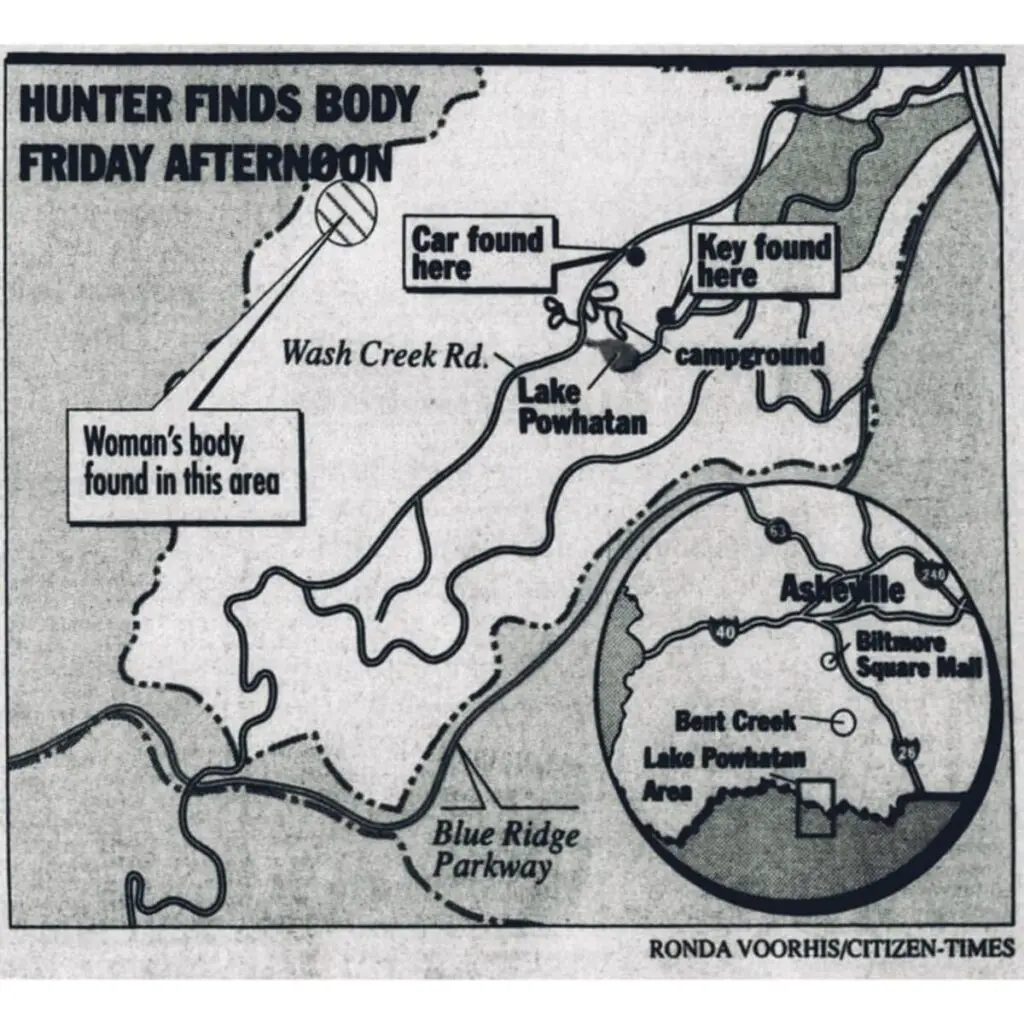
Karen Styles: map of where a deer hunter found her body

The 1994 murder of Karen Styles

May 9, 2023
Sacks of USAID yellow peas in a storage facility.

USAID official pleads guilty to taking part in $550M bribery scheme: ‘Violated the public trust’

June 14, 2025
Karen Styles: map of where a deer hunter found her body

The 1994 murder of Karen Styles

0
Dwane Roy Dreher: photo of his 2nd wife, Lois Genzler Dreher at 16 years old

The 1955 disappearance of U.S. Navy veteran Dwane Roy Dreher

0
Alta Braun: professional photo taken when she was about 4 years old.

The 1917 unsolved murder of Alta Marie Braun

0
Vacation Nightmare: The gruesome murder of Janice Pietropola and Lynn Seethaler

Vacation Nightmare: The gruesome murder of Janice Pietropola and Lynn Seethaler

0
Kristi Nikle: photo of suspect Floyd Tapson

The 1996 disappearance of Kristi Nikle

0
Frank and Tessie Pozar: photo of their son, Frank Pozar, Jr.

Motel Mystery: What happened to Frank and Tessie Pozar?

0
Evil on The Road Part 4: Desmond Joseph Runstedler

Evil on The Road Part 4: Desmond Joseph Runstedler

0
Delivery driver faces death penalty for kidnapping, killing Athena Strand

Delivery driver faces death penalty for kidnapping, killing Athena Strand

April 14, 2026
A black-and-white photo of a group of musicians dressed in white, with some wearing cowboy hats, standing in a horseshoe shape, while a Black woman in a white dress sings into a microphone. The group is standing on the rodeo grounds, and in the background are the stands where the audience is seated.

The Bootlegging, Blues Singing Star of 1930s Prison Radio

April 13, 2026
Soldier and his girlfriend fatally shot in Valentine’s Day slaying

Soldier and his girlfriend fatally shot in Valentine’s Day slaying

April 10, 2026
Carissa Gunter, 19,

Burglar posed as college student to spend 3 nights in dorm stealing from students: police

April 9, 2026
In New York, Mamdani’s Appointee Wants to Change Policing

In New York, Mamdani’s Appointee Wants to Change Policing

April 9, 2026
Anti-Israel activist admits to torching 11 NYPD vehicles in arson spree

Anti-Israel activist admits to torching 11 NYPD vehicles in arson spree

April 9, 2026
The hands of a Black woman hold the silver-colored framed black-and-white photo of her son, a young Black man wearing a dark-colored baseball cap with the logo of the Georgetown University Hoyas bulldog, a neatly trimmed goatee, a studded earring, and a light-colored baseball-style jersey.

Mac Dre Used Jail Phones to Record an Album — And Fight the System

April 8, 2026
Beyond the Crime Scene with Bee Astronaut

Categories

  • Featured
  • News
  • Podcast
  • True Crime Stories
  • Videos

Legal Pages

  • Home
  • Contact Us
  • Privacy Policy
  • Terms of Use
  • Cookie Privacy Policy
  • California Consumer Privacy Act (CCPA)
  • DMCA

© 2023 All right reserved.

No Result
View All Result
  • Home
  • News
  • True Crime Stories
  • Videos
  • Podcast

© 2023 All right reserved.